'%20id='ico-down'%20stroke='%23000000'%20stroke-width='1.5'%3e%3cg%20transform='translate(1092.250000,%20254.750000)'%3e%3cpolyline%20id='Path-2-Copy-4'%20transform='translate(5.500000,%202.750000)%20scale(1,%20-1)%20rotate(-180.000000)%20translate(-5.500000,%20-2.750000)%20'%20points='0%200%205.5%205.5%2011%200'%3e%3c/polyline%3e%3c/g%3e%3c/g%3e%3c/g%3e%3c/svg%3e)



'%20fill='%23000000'%3e%3cg%20id='icons'%20transform='translate(56.000000,%20160.000000)'%3e%3cpath%20d='M144,7339%20L140,7339%20L140,7332.001%20C140,7330.081%20139.153,7329.01%20137.634,7329.01%20C135.981,7329.01%20135,7330.126%20135,7332.001%20L135,7339%20L131,7339%20L131,7326%20L135,7326%20L135,7327.462%20C135,7327.462%20136.255,7325.26%20139.083,7325.26%20C141.912,7325.26%20144,7326.986%20144,7330.558%20L144,7339%20L144,7339%20Z%20M126.442,7323.921%20C125.093,7323.921%20124,7322.819%20124,7321.46%20C124,7320.102%20125.093,7319%20126.442,7319%20C127.79,7319%20128.883,7320.102%20128.883,7321.46%20C128.884,7322.819%20127.79,7323.921%20126.442,7323.921%20L126.442,7323.921%20Z%20M124,7339%20L129,7339%20L129,7326%20L124,7326%20L124,7339%20Z'%20id='linkedin-[%23161]'%3e%3c/path%3e%3c/g%3e%3c/g%3e%3c/g%3e%3c/svg%3e)
'%20fill='%23000000'%3e%3cg%20id='icons'%20transform='translate(56.000000,%20160.000000)'%3e%3cpath%20d='M335.821282,7259%20L335.821282,7250%20L338.553693,7250%20L339,7246%20L335.821282,7246%20L335.821282,7244.052%20C335.821282,7243.022%20335.847593,7242%20337.286884,7242%20L338.744689,7242%20L338.744689,7239.14%20C338.744689,7239.097%20337.492497,7239%20336.225687,7239%20C333.580004,7239%20331.923407,7240.657%20331.923407,7243.7%20L331.923407,7246%20L329,7246%20L329,7250%20L331.923407,7250%20L331.923407,7259%20L335.821282,7259%20Z'%20id='facebook-[%23176]'%3e%3c/path%3e%3c/g%3e%3c/g%3e%3c/g%3e%3c/svg%3e)

The Kingdom of Saudi Arabia (KSA) is the richest country in the Middle East. Its cost of living – especially in the two largest cities, Jeddah and Riyadh – is comparable to other major hubs around the world. But, salaries are high, and if you budget right, you will likely (maybe) have a comfortable life there.
From everyday expenses like groceries and utilities to housing and healthcare, here’s a clear picture of what it really costs to live in Saudi Arabia and help you prepare for your new adventure.
Continue reading for the following information:
Is Saudi Arabia’s economy good?
With a GDP per capita of US$77,480, Saudi Arabia is the third-richest country in the Gulf Cooperation Council (GCC) after Qatar and the United Arab Emirates (IMF, 2026). It is predicted to experience 4% GDP growth and 2% inflation in 2026. These are roughly in line with averages for the Gulf region.

Inflation and disposable income in Saudi Arabia
Of course, the GDP per capita doesn’t mean all Saudi residents have $75K to spend. According to the 2023 Housing Income and Expenditure Survey (HIES), households have a monthly disposable income of SAR11,839, or an annual disposable income of SAR142,068 (approx. US$37,885).
In 2021, ESCWA reported that 13.6% of Saudi Arabia’s citizen population lived below the poverty line. You can learn more about average salaries and incomes in our article on minimum wage in Saudi Arabia.
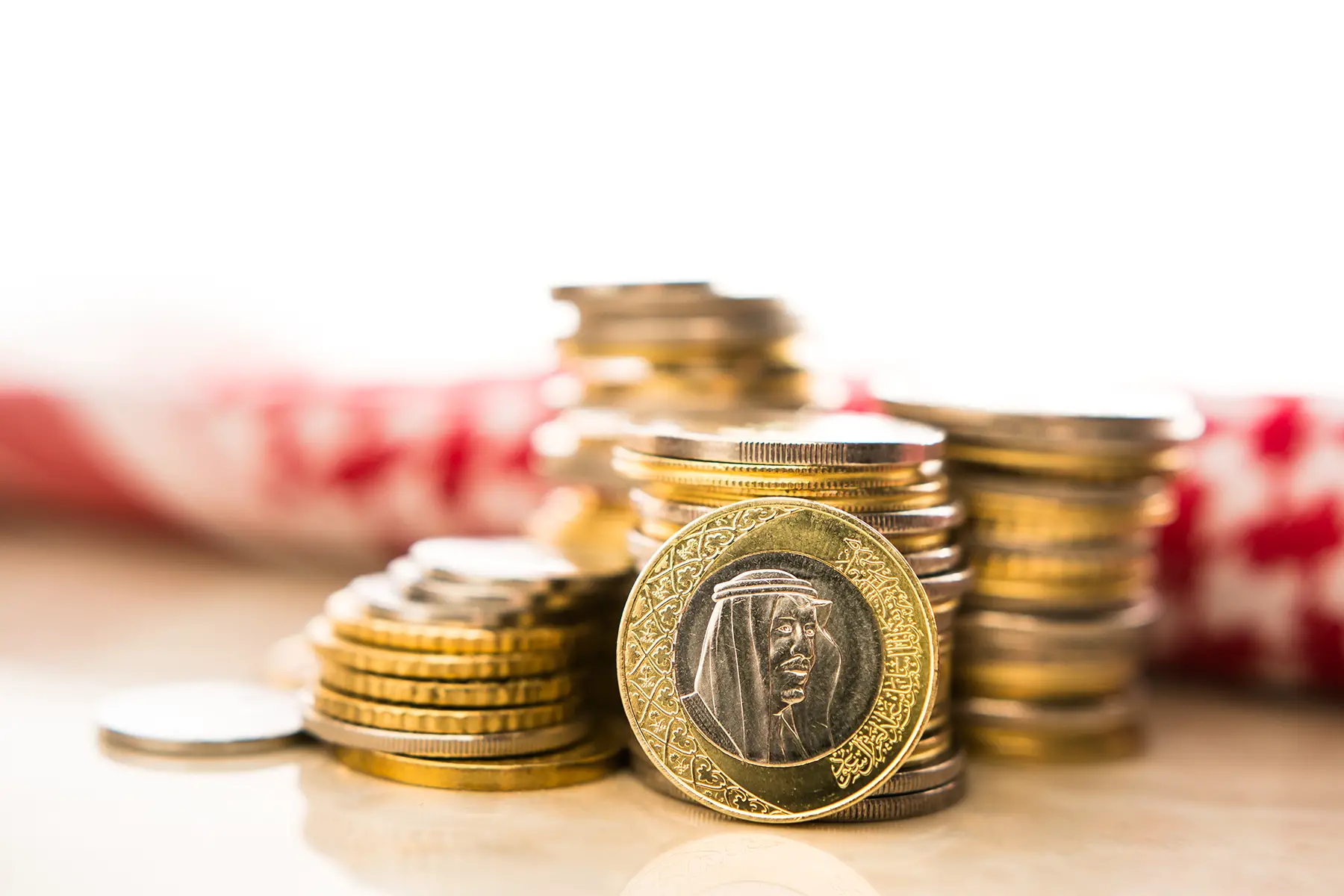
The cost of living in Saudi Arabia in 2025
Using the 2023 Household Income and Expenditure Survey (monthly final monetary consumption expenditure statistics) and adjusting for inflation in 2024 (1.7%), 2025 (2%) and 2026 (2%), it is estimated that the average household in Saudi Arabia will need SAR9,974 (US$2,658) a month in 2026.

Keep reading for an overview of the cost of living expenses you might come across in your daily life.
The price of groceries in Saudi Arabia in 2025
Beer, wine, and liquor
Being a staunchly Islamic country, alcohol is strictly banned in Saudi Arabia. Buying, being in possession of, or consuming alcohol is considered a crime against God, and punishments are severe. As a general rule of thumb, you are better off waiting until you are traveling abroad to indulge in a drink or two.
Food and drink
Food and non-alcoholic drinks are the largest expense in Saudi Arabia, accounting for 27.9% of the monthly budget. Households are expected to spend an average of SAR 2,783 per person per month on groceries (2026).
The average price ranges* of basic supermarket items include:
| Product | Price range | Product | Price range |
| Apples (1 kilo) | SAR 5–12 | Water (1.5 liter) | SAR 1.50–4 |
| Bread (1 loaf) | SAR 1–7 | Regular milk (1 liter) | SAR 5–9 |
| Vegetable oil (1 liter) | SAR 10–15 | Rice (1 kilo) | SAR 5–11 |
| Coffee (100 gram) | SAR 18–40 | Tea (per bag) | SAR 0.10–1.75 |
| Eggs (12) | SAR 6–17 | Tomatoes (1 kilo) | SAR 3–9 |
| Orange juice (1 liter) | SAR 6–19 |
Hygienic and household products
Hygienic and household products include everything from toothpaste and shampoo to dish soap (or washing-up liquid) and toilet bleach.

The average price ranges* of hygienic and household necessities includes:
| Product | Price range | Product | Price range |
| All-purpose cleaner (1 liter) | SAR 8–24 | Shampoo (200 ml) | SAR 11–30 |
| Deodorant (100 ml) | SAR 10–17 | Soap (1 bar) | SAR 6–29 |
| Dish soap (1 liter) | SAR 7–29 | Sanitary pads (per pad) | SAR 0.30–0.60 |
| Garbage bags (per bag) | SAR 0.25–1.25 | Toilet paper (per roll) | SAR 1.20–2.50 |
| Laundry detergent (1 liter) | SAR 9–22 | Toothpaste (125 ml) | SAR 4.50–86 |
2026 housing costs in Saudi Arabia
In 2026, the average monthly housing costs in Saudi Arabia are forecasted to be SAR 1,406 per person. This likely includes rent and mortgage payments, water, electricity, gas, and other fuels.


Rent and property prices
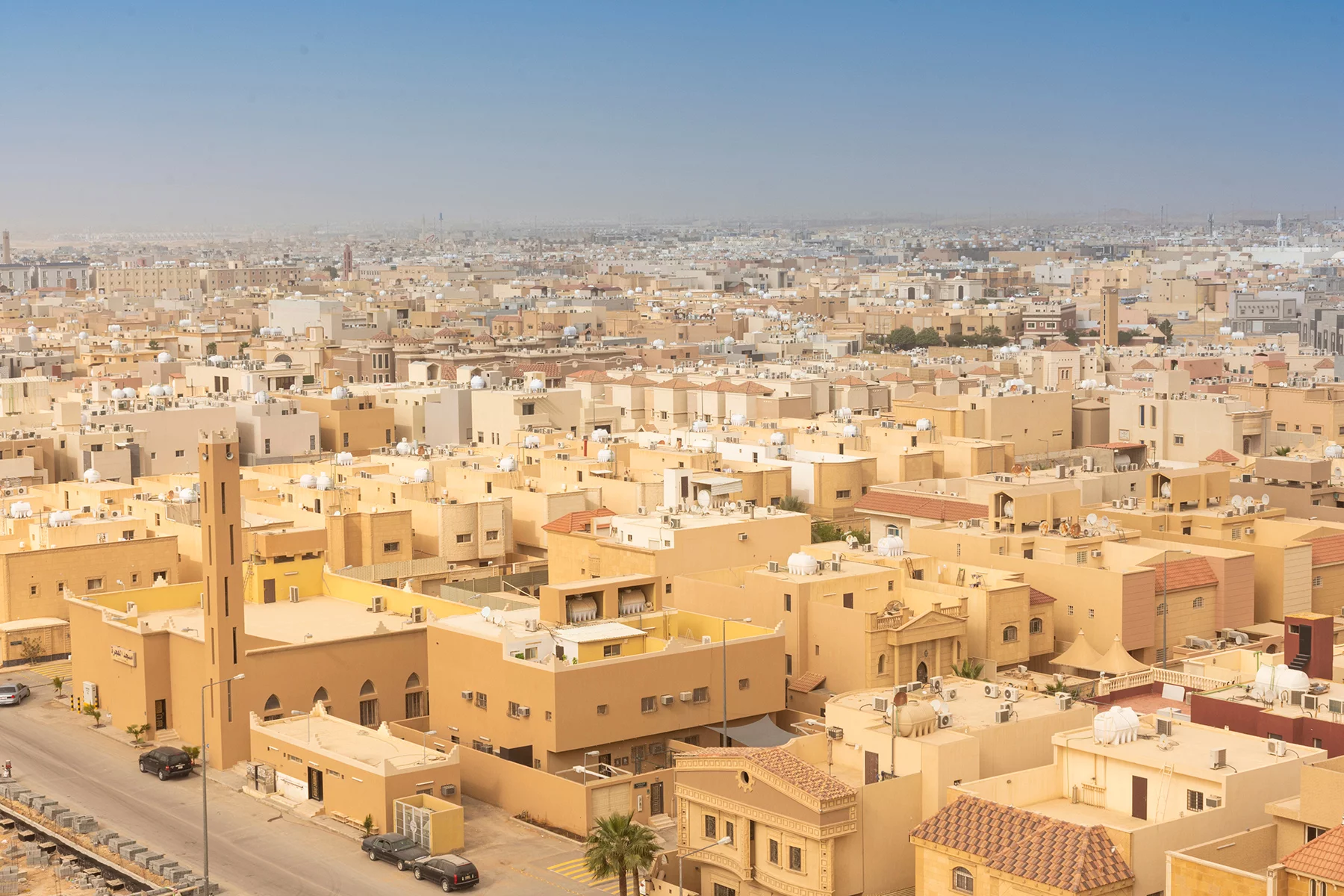
Real estate prices vary greatly throughout Saudi Arabia. Villas in Jeddah (جِدَّة), Medina (المدينة المنورة), and Riyadh (الرياض) are comparatively more expensive than apartments in rural areas and less popular cities.
In February 2026, the average rent for a home is around SAR 1,750 per month for a one-bed apartment and SAR 2,650 for a three-bed house (outside the city center). Potential homeowners paid an average of SAR 1.15 billion for a property.
Depending on the location, you’ll pay the following average housing prices (February 2026):
| Ad Dammam | Jeddah | Riyadh | |
| Average monthly rent (house) | SAR 2,466 – 4,370 | SAR 1,900 – 6,240 | SAR 2,500–25,000 |
| Average monthly rent (flat) | SAR 1,000 – 2,600 | SAR 1,000–4,500 | SAR 2,000–9,000 |
| Property price per square meter (city center) | SAR 3,667 | SAR 6,390 | SAR 10,896 |
| Property price per square meter (suburbs) | SAR 2,878 | SAR 3,790 | SAR 7,183 |
The most expensive places are Al Khobar (الخبر), Dhahran (الظهران), Jeddah, and Riyadh. However, if you’re looking to live in Saudi Arabia on a budget, cheaper cities to move to include:
| Abha | Ha’il | Najran | |
| Average monthly rent (house) | SAR 1,500 – 3,000 | SAR 900 – 2,250 | SAR 1,200 – 1,500 |
| Average monthly rent (flat) | SAR 1,000–1,500 | SAR 700 – 2,400 | SAR 500 – 7,50 |
| Property price per square meter | SAR 2,250 – 4,000 | SAR 1,900 – 2,500 | – |
Utility bills: water, gas, electricity
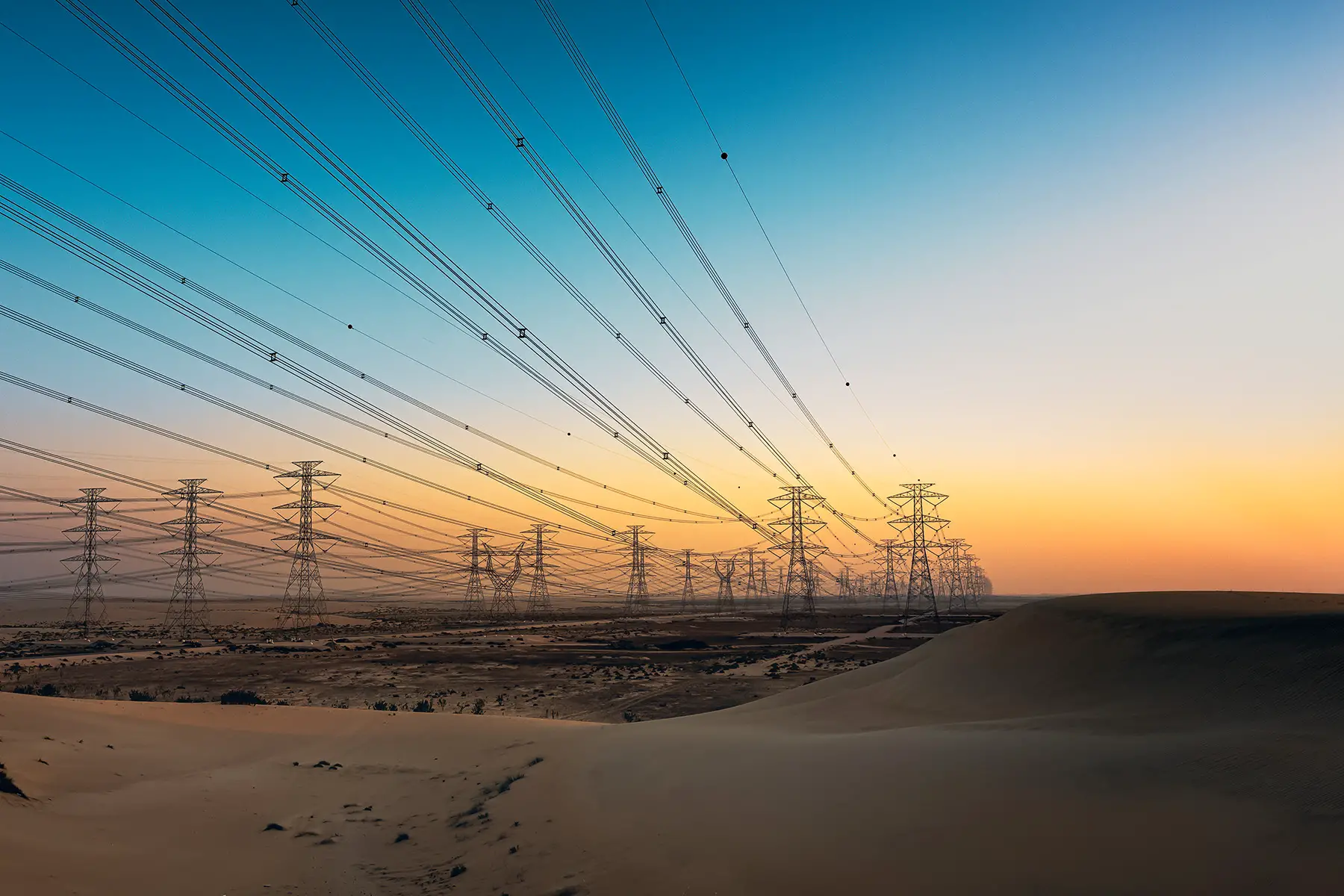
The Saudi government partially subsidizes utilities, so average costs for water, gas, and electricity remain low. Depending on your location, use, and property size, you can expect to pay around SAR 228–700 per month.
Keep in mind that many households rely on air conditioning units to keep things comfortable in the summer. As such, your utility bill may skyrocket during the hot summer months.

While heavily regulated, Saudi Arabia relies on private utility companies for their supply. As such, prices may differ per region and provider. For example, Marafiq (available in Jubail and Yanbu) charges the following for residential use of water (as of February 2026):
| Tariff | ||
| Water | 1–16 cubic meters | SAR 0.15 |
| 16–30 cubic meters | SAR 1.50 | |
| 30–45 cubic meters | SAR 4.50 | |
| 45–60 cubic meters | SAR 6.00 | |
| 60+ cubic meters | SAR 9.00 |
Electricity from the Saudi Electricity Company costs SAR 18 for residential use up to 6,000 kilowatt/hour. Above that, it charges SAR 30 kilowatt/hour.
Most residences in Saudi Arabia are outfitted with a GASCO LPG gas cylinder, used for cooking. In 2026, the regulated refill price for an 11 kg household LPG cylinder is about SAR 26.23. Retail prices for an empty fiberglass gas cylinder can be hundreds of riyals from private sellers.
Discover more about utility prices and providers by reading our article on utilities in Saudi Arabia.
The cost of Saudi healthcare
Saudi Arabia provides free or subsidized public healthcare to all its citizens. Expat residents must take out private health insurance (تأمين صحي) to cover any medical bills. In 2026, the average monthly healthcare costs are expected to be around SAR 190 per household.

While employers typically include health insurance in their employment benefits package, medical coverage varies per policy. If you are accident-prone, you may want to take out an additional insurance policy.
Our article on health insurance in Saudi Arabia explains more about private healthcare and coverage.

Internet and telecom prices
The cost of internet and other telecommunication services varies depending on several factors, including your provider, location, and the type of connection or service. For example, OSN Global TV packages start from SAR 119 per month. Meanwhile, you can get a Mobile prepaid package from the government-run Saudi Telecom Company (STC) starting from as little as SAR 34.50 per month.
The average monthly communication costs in 2026 to be around SAR 509 per household.

The cost of clothing and footwear
The price of clothing and footwear in Saudi Arabia is in line with other countries around the world, depending on your brand of choice. Of course, designer clothing and accessories are more expensive due to import taxes.
In 2026, people are expected to spend a monthly average of SAR 958 per household on their attire.
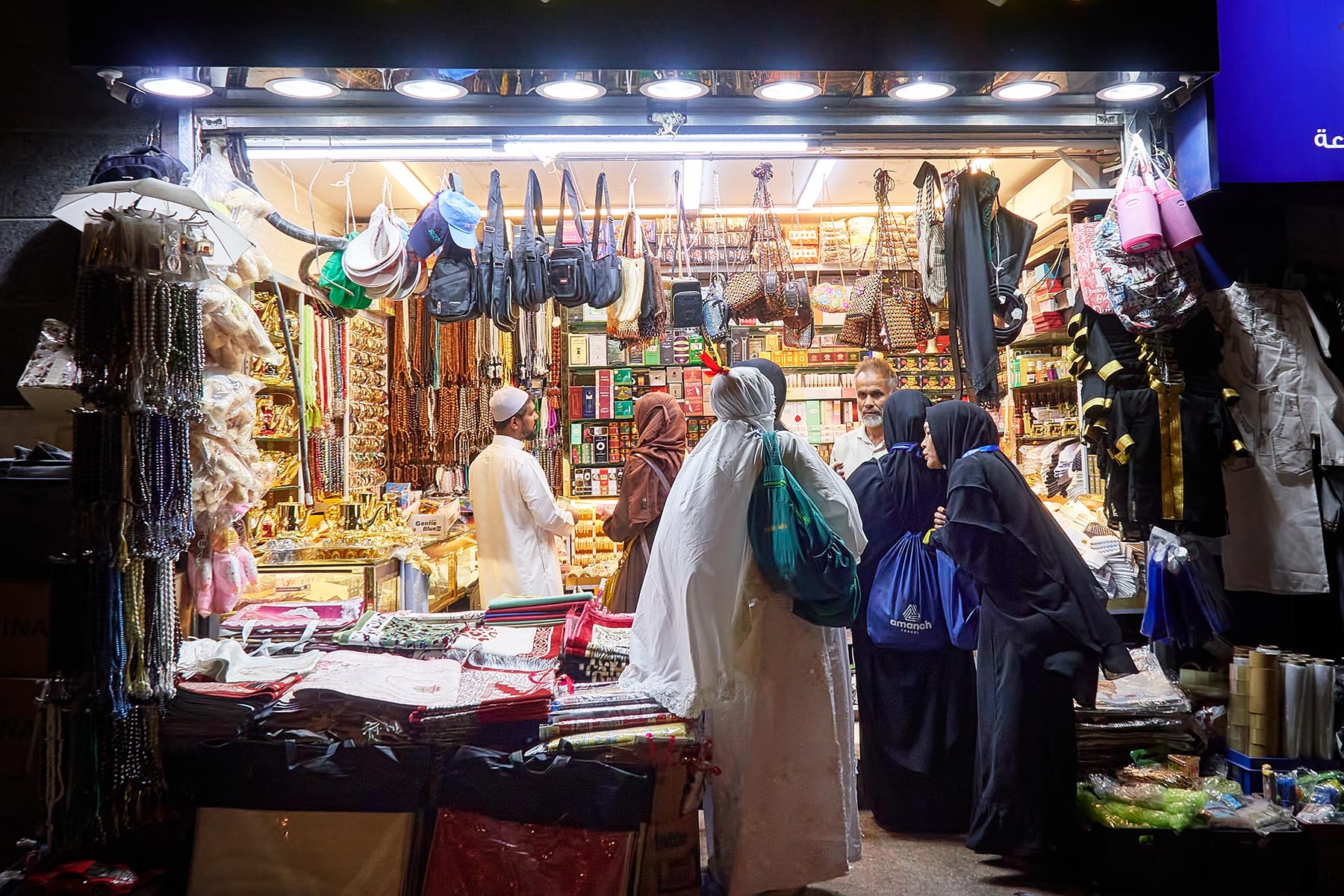
The prices vary greatly per item. For example, you can expect to pay between SAR 3.50–37.80 for underwear. Meanwhile, dresses or jeans cost SAR 60–400, and shoes around SAR 160–600.
The cost of transportation in Saudi Arabia
In 2026, the monthly average cost of transportation in Saudi Arabia is predicted to be SAR 1,047 per household.
Public transport
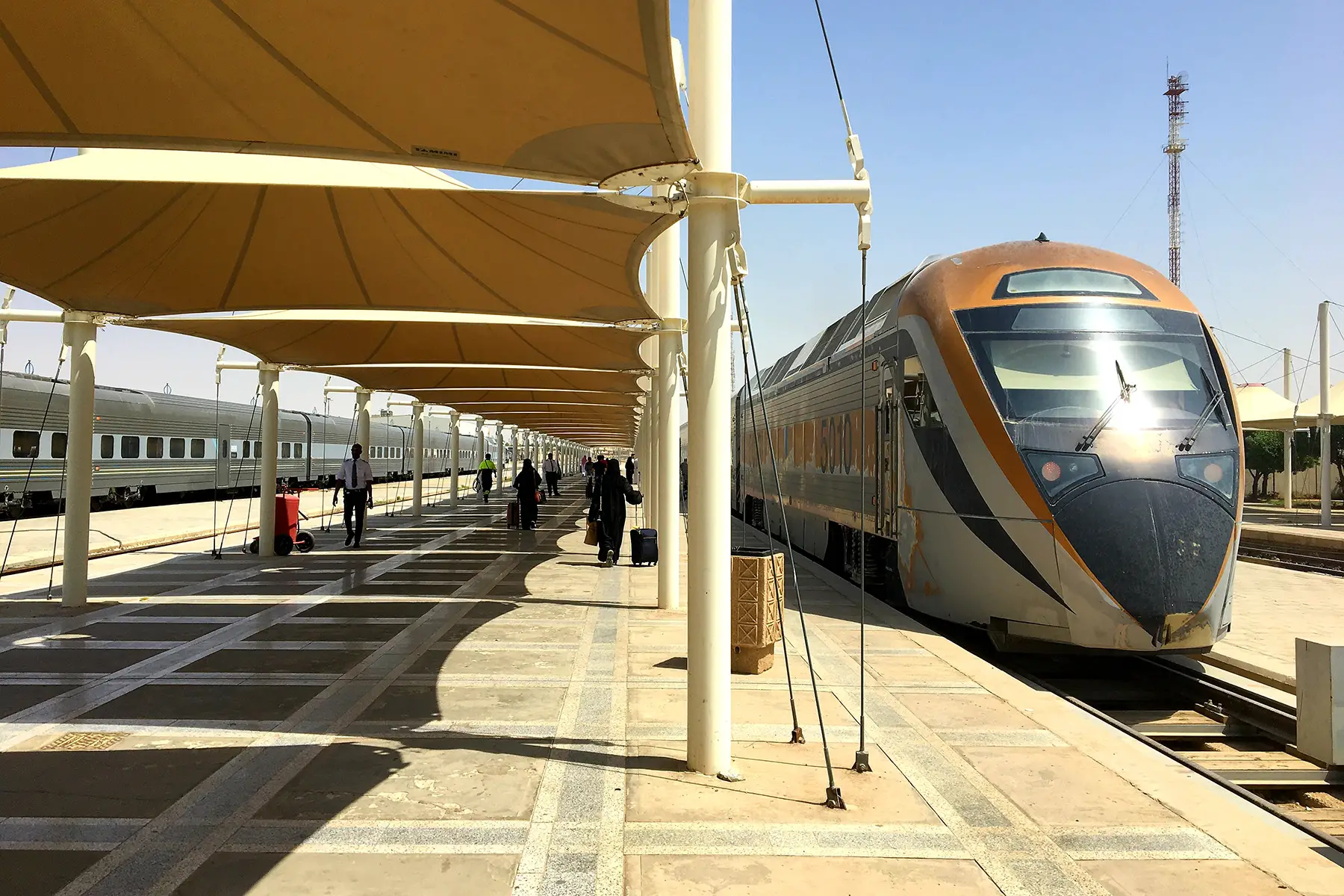
As might be expected, Saudi Arabia’s public transport network is less developed than, for example, Singapore’s. Although the country has promised heavy investments in public transport by 2030, progress remains slow.
The public travel options that are available (e.g., buses, metros, and trains, depending on your location) are efficient and generally cost-effective. Fares vary by mode of transport. For example, a single city bus trip costs SAR 3.45–9.00, while a monthly travel pass will set you back SAR 50–207.
If you are planning to commute to work, it’s recommended you look into getting a monthly plan to travel at a discounted cost.
Driving and vehicle costs
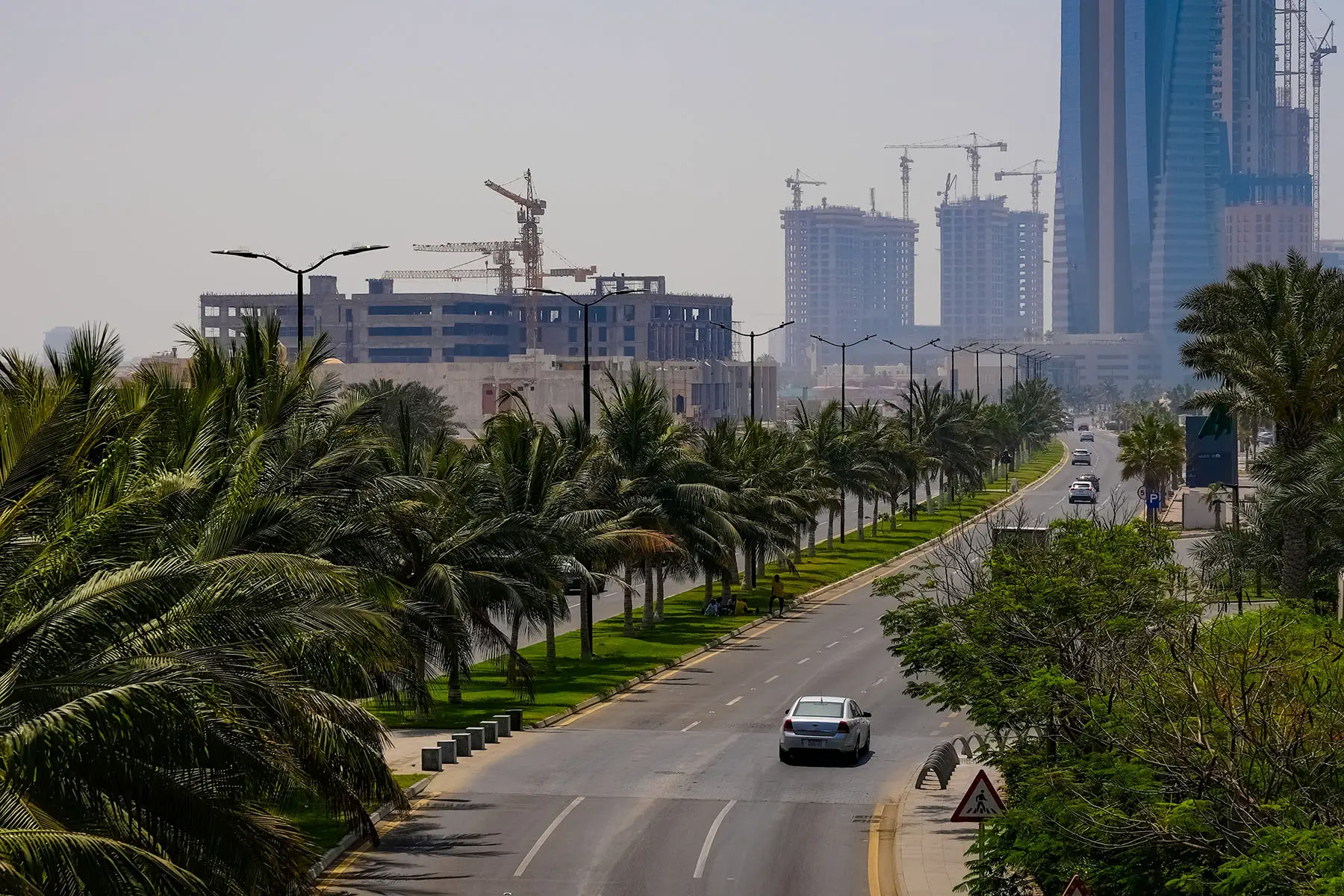
Cars are the primary method of transportation in Saudi Arabia. While driving (or being driven) presents a lot more freedom, it’s also generally more expensive than public transport. Car owners pay an average of SAR 750 – 1,500 per month for the use and maintenance of their vehicle.
Beyond the initial costs of lessons, a driving license, and the actual purchase of the vehicle, you’ll need to budget for:
- Car insurance – the mandatory Third Party Liability insurance cost between SAR 100–300 per month
- Fuel costs – as of February 2026, gasoline costs SAR 2.33 per liter, and diesel costs SAR 1.79 per liter
- Maintenance – Saudi Arabia’s hot, abrasive climate requires you to regularly maintain your car. Depending on your vehicle’s make and model, servicing costs can be around SAR 200–400.
For more about driving costs, mandatory insurance, and exchanging your foreign driver’s license, see our article on driving in Saudi Arabia.

How much does leisure and entertainment cost?
It should be noted that expats, especially women, may feel a bit restricted in their leisure activities. In Saudi Arabia, gender segregation is the norm, and social etiquette is different from what many are used to.
Movie theaters and cinemas
A standard cinema ticket in Saudi Arabia costs around SAR 40–80, depending on the location and the screening. Prices are the same on both weekdays and weekends.
Restaurants
The estimated monthly spending is SAR 1,167 per household on restaurants and hotels.
With inflation rising and the introduction of a new value-added tax, the cost of restaurants in Saudi Arabia is increasing. That said, a range of affordable dining options are always available.
A simple meal in a basic eatery usually costs around SAR 15–50, while a meal for two in a mid-range restaurant may charge up to SAR 350. Of course, restaurants are more expensive in expat areas.

Sports
Saudi Arabia has seen a significant increase in gyms in recent years. Memberships cost around SAR 200–600 per month, depending on the gym and location. If you sign up during Ramadan, you may get a discounted deal.
It’s recommended you try out different clubs before signing up for a membership.
The cost of Saudi education and childcare
Childcare
Working parents with (young) children may need to arrange for childcare from time to time. In Saudi Arabia, options include daycares, nurseries, and preschools or kindergartens. In addition, companies that employ more than 50 female employees are legally required to provide childcare during office hours.
Most daycare centers and nurseries in Saudi Arabia are privately operated. Monthly costs vary widely by location and type of facility, but typically range from around SAR 500 to SAR 2,000 per month.
It’s rare for families to hire a nanny or au pair. Instead, most people have housemaids and entrust childminding duties to them.
Children’s education
The public school system in Saudi Arabia offers free and good-quality schooling to Saudi nationals and foreign Muslims. Parents will only need to pay for books, materials, and the occasional outing.
Parents who prefer to (or must) send their children to an international or private school must pay tuition fees. These vary widely depending on your child’s grade and the school’s curriculum, location, and reputation.

For example, the annual cost for a kindergarten at an international school ranges from SAR 18,500–35,000 per year, though fees at top-tier schools can be much higher. Tuition fees for high school students start from around SAR 15,000 for the cheapest international schools and can go up to SAR 105,000/year. Parents will also need to take into account the costs of transport, uniforms, extracurricular activities, and materials.
Discover more about school curriculums and fees in our article on international schools in Saudi Arabia.

University tuition fees
Studying in Saudi Arabia is relatively affordable compared to some other countries.
The cost of a university degree varies greatly per university and study program. Some charge SAR 29,000–32,500 per year, whereas others will set you back SAR 50,000–100,000 per year. Often, international students pay more than Saudi students as well.
Find out more about degree programs and costs by reading our article on studying in Saudi Arabia.

How does Saudi Arabia compare to the rest of the world?
Saudi Arabia receives mixed reviews when it comes to standards of living. For example, the country ranks 37th in the world on the Human Development Index. Similarly, the Saudi cities of Riyadh, Jeddah, and Al Khobar perform well on the Global Liveability Index 2025.
The highest Saudi city on the 2024 Mercer’s quality of living index is Riyadh (164th), closely followed by Jeddah (169th). This performance is well below other major capitals like New York (45th), Rome (59th), Seoul (81st), Cape Town (105th), Bangkok (124th), and Jakarta (148th).

The cost of living in Riyadh
Compared to other capital cities, Riyadh’s cost of living is (as of February 2026):
- 62% cheaper than New York (the US)
- 54% cheaper than London (the UK)
- 47% cheaper than Amsterdam (the Netherlands)
- 74% more expensive than Jakarta (Indonesia)
- 134% more expensive than Delhi (India)
- 140% more expensive than Dhaka (Bangladesh)
- 145% more expensive than Islamabad (Pakistan)
The cost of living in Jeddah
Jeddah is Saudi Arabia’s second-largest city, with an estimated population of roughly 5 million people (2026). It is the country’s commercial center and the principal gateway to Mecca Sharif, the holiest place in Islam.
The cost of living in Jeddah is about a quarter cheaper than in Riyadh (as of January 2025). Compared to other major cities, it is:
- 69% cheaper than New York (the US)
- 63% cheaper than London (the UK)
- 57% cheaper than Amsterdam (the Netherlands)
- 41% more expensive than Jakarta (Indonesia)
- 90% more expensive than Delhi (India)
- 95% more expensive than Dhaka (Bangladesh)
- 99% more expensive than Islamabad (Pakistan)
The cost of living in Al Khobar
Serving as the primary exporter of fuel, Al Khobar experienced rapid growth during and after the discovery of oil in Saudi Arabia. The port city is currently considered a resort town, with its beaches and view of Half Moon Bay (شاطئ نصف القمر).

Al Khobar’s cost of living is around 11% cheaper than in Riyadh, as well as:
- 66% cheaper than New York (the US)
- 59% cheaper than London (the UK)
- 53% cheaper than Amsterdam (the Netherlands)
- 55% more expensive than Jakarta (Indonesia)
- 108% more expensive than Delhi (India)
- 113% more expensive than Dhaka (Bangladesh)
- 118% more expensive than Islamabad (Pakistan)
Financial support for the cost of living in Saudi Arabia
Saudi nationals are entitled to social security benefits, depending on their living situation. Low-income households may apply for the Citizen’s Account Program (التسجيل في برنامج حساب المواطن), provided they meet all requirements. The amount of financial support received each month depends on household income, family size and the ages of dependents, and is calculated individually rather than at fixed flat rates. Parents should also take into account other social support programs that may apply to their situation.
Other benefits that can help you with the cost of living in Saudi Arabia include:
- Advantages and Offers Programs – provides benefits, offers, and discounts to Saudi retirees
- Housing support – there are several programs, including for men, low-income families, and women
- Social loans – for carers looking after orphans and people with disabilities
- Social Pension – available for a wide range of situations, including orphans, people who are temporarily or permanently unable to work, seniors over 60, unmarried women, and unsupported families
The website of the Ministry of Human Resources and Social Development has more information about social security in Saudi Arabia.
Unfortunately, foreign expats are not eligible for government financial aid to help with the cost of living in Saudi Arabia. However, since zakat (زكاة – taking care of the vulnerable) is a crucial pillar of Islam, the country has numerous charities that can help.
Tips on how to save money in Saudi Arabia
All affordability is relative to your household income and size. A single bachelor may have more to spend than a family of four.
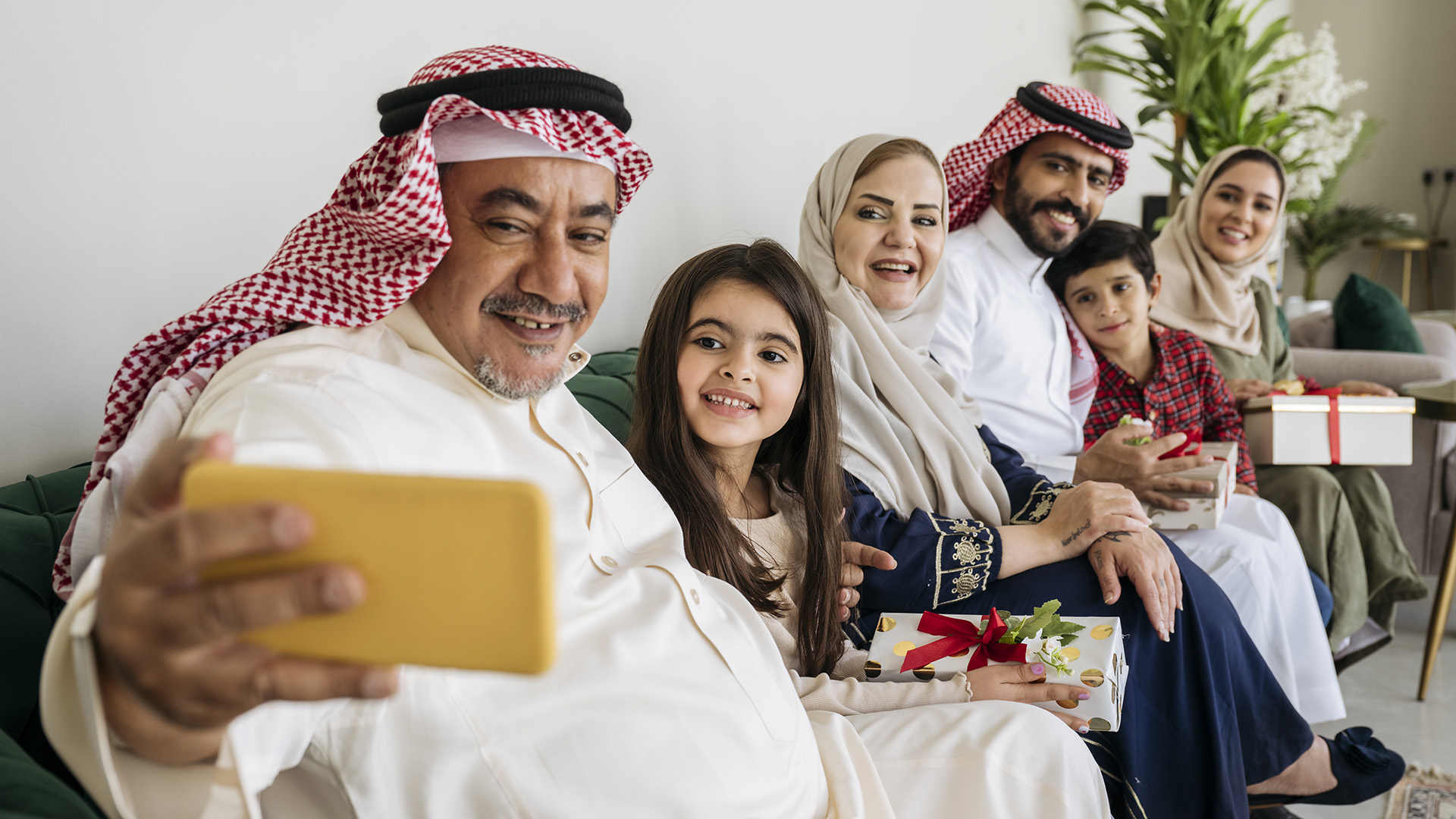
Here are some tips for saving money while living in Saudi Arabia:
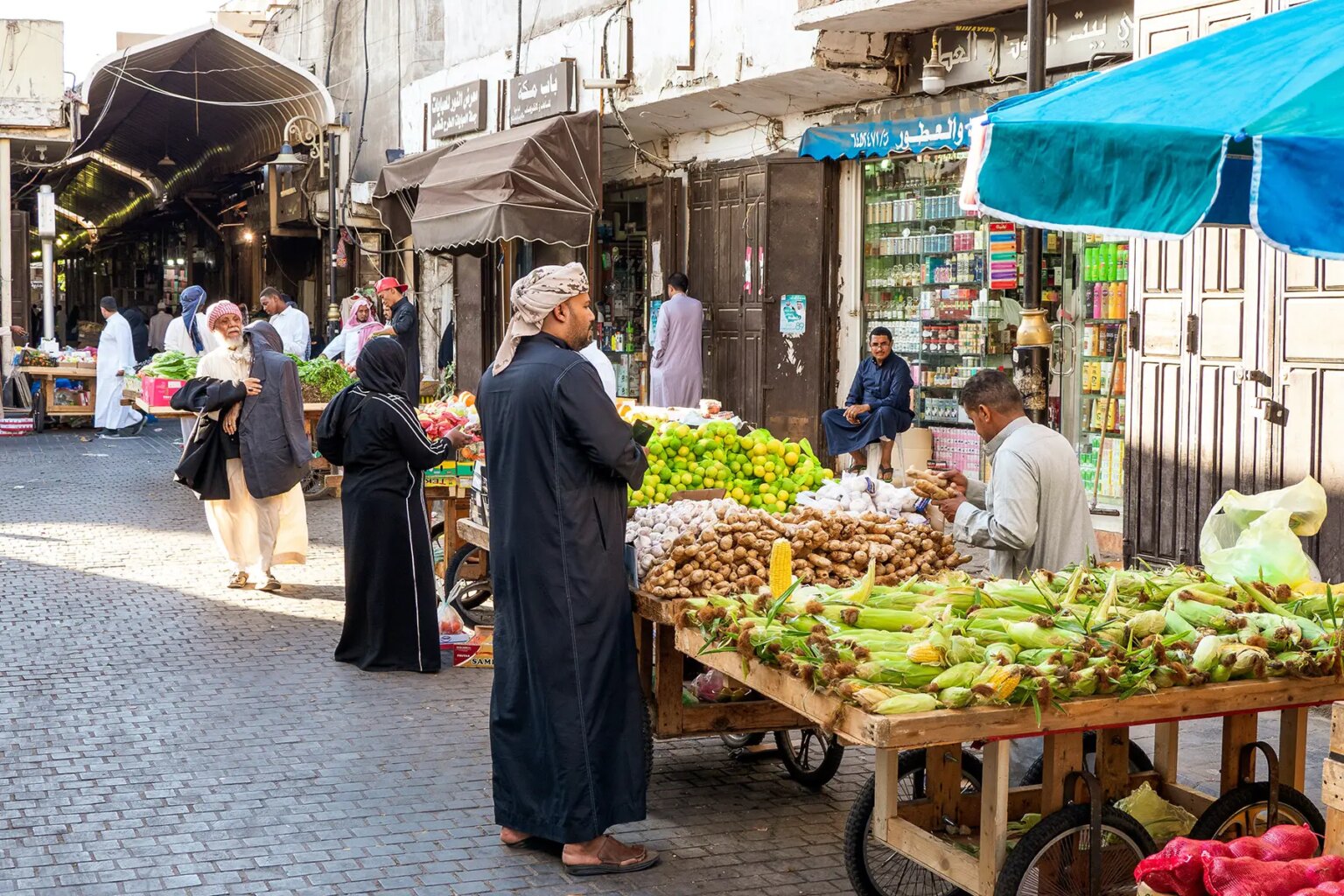
- Shop smartly at local markets – local markets often have fresh produce, vegetables, and meats at a lower price than supermarkets. Local products are also sold at a better rate than imported goods.
- Plan meals ahead and buy in bulk – many hypermarkets, like Carrefour, Lulu, and Panda, offer frequent promotions and discounts, especially for bulk purchases. Time your visit well: there are extra discounted prices on weekends or during Ramadan.
- Dine out strategically – when you are eating out, look for local restaurants as these are cheaper than international chains. Also, be sure to take advantage of affordable buffet options during Ramadan or special promotions.
- Embrace ride-sharing services – while fuel is cheaper in Saudi Arabia than elsewhere, it can still pose a large expense. Use ride-sharing apps to lower your travel costs and make sure to drive outside peak times when fares can be significantly lower.
- Stay fit without splurging – use public parks for outdoor workouts instead of expensive gym memberships. Many expat communities also organize free or low-cost fitness sessions.
- Use energy wisely – save on electricity by insulating your home, using energy-efficient appliances, and taking advantage of off-peak energy tariffs (e.g., to do your washing).
- Buy your goods at sales and souks – Saudi malls are tempting, but try to shop during sales or major shopping festivals, especially before Ramadan and Eid, which offer huge discounts. Be sure to explore traditional souls (like Riyadh’s Al-Zal Market or Jeddah’s Al-Balad) as well; these often sell goods at a cheaper price than malls.
Useful resources
- Ministry Department of Consumer Protection – official government website of the department responsible for consumer protection and combating commercial fraud
- Saudi Food Bank (جمعية بنك الطعام السعودي) – official website of the Saudi Food Bank
- Numbeo – information on current living costs in Saudi Arabia