
'%20id='ico-down'%20stroke='%23000000'%20stroke-width='1.5'%3e%3cg%20transform='translate(1092.250000,%20254.750000)'%3e%3cpolyline%20id='Path-2-Copy-4'%20transform='translate(5.500000,%202.750000)%20scale(1,%20-1)%20rotate(-180.000000)%20translate(-5.500000,%20-2.750000)%20'%20points='0%200%205.5%205.5%2011%200'%3e%3c/polyline%3e%3c/g%3e%3c/g%3e%3c/g%3e%3c/svg%3e)


'%20fill='%23000000'%3e%3cg%20id='icons'%20transform='translate(56.000000,%20160.000000)'%3e%3cpath%20d='M144,7339%20L140,7339%20L140,7332.001%20C140,7330.081%20139.153,7329.01%20137.634,7329.01%20C135.981,7329.01%20135,7330.126%20135,7332.001%20L135,7339%20L131,7339%20L131,7326%20L135,7326%20L135,7327.462%20C135,7327.462%20136.255,7325.26%20139.083,7325.26%20C141.912,7325.26%20144,7326.986%20144,7330.558%20L144,7339%20L144,7339%20Z%20M126.442,7323.921%20C125.093,7323.921%20124,7322.819%20124,7321.46%20C124,7320.102%20125.093,7319%20126.442,7319%20C127.79,7319%20128.883,7320.102%20128.883,7321.46%20C128.884,7322.819%20127.79,7323.921%20126.442,7323.921%20L126.442,7323.921%20Z%20M124,7339%20L129,7339%20L129,7326%20L124,7326%20L124,7339%20Z'%20id='linkedin-[%23161]'%3e%3c/path%3e%3c/g%3e%3c/g%3e%3c/g%3e%3c/svg%3e)
'%20fill='%23000000'%3e%3cg%20id='icons'%20transform='translate(56.000000,%20160.000000)'%3e%3cpath%20d='M335.821282,7259%20L335.821282,7250%20L338.553693,7250%20L339,7246%20L335.821282,7246%20L335.821282,7244.052%20C335.821282,7243.022%20335.847593,7242%20337.286884,7242%20L338.744689,7242%20L338.744689,7239.14%20C338.744689,7239.097%20337.492497,7239%20336.225687,7239%20C333.580004,7239%20331.923407,7240.657%20331.923407,7243.7%20L331.923407,7246%20L329,7246%20L329,7250%20L331.923407,7250%20L331.923407,7259%20L335.821282,7259%20Z'%20id='facebook-[%23176]'%3e%3c/path%3e%3c/g%3e%3c/g%3e%3c/g%3e%3c/svg%3e)

The Story
It started with a set of keys and a very long drive.
For years, Ania and I had a comfortable life in Poland. We had our own flat, stable positions in well-regarded hospitals, and the kind of routine that feels like a warm blanket-predictable, safe, but eventually, a little bit stifling. I am a pediatrician, and Ania is a radiologist; our lives were measured in growth charts and grayscale imaging. But every time we returned from a holiday in Provence, the grey skies of our home city felt just a little bit heavier.
One evening, over a glass of wine that was definitely not from the Luberon, we made the decision. We wouldn’t just visit anymore. We would move.
The transition wasn’t an overnight affair. There is a specific kind of melancholy in renting out the flat you’ve spent years decorating. Handing over the keys to our tenants felt like closing a chapter of a book we weren’t quite finished with. We packed our lives into a car, left the banks of the Vistula, and began the 1,600-kilometre trek toward the Mediterranean.
The Shock of the South
When we arrived in the south of France, specifically the rugged, sun-drenched outskirts of Marseille, the first thing that hit us wasn’t the beauty-it was the noise. Marseille is not the polished, cinematic version of France you see in “Emily in Paris.” It is loud, chaotic, diverse, and fiercely alive. It’s a city that smells of salt, grilled fish, and scooter exhaust.
For two Polish doctors accustomed to a certain level of Central European order, the “Marseillais” way of life was a culture shock. In Poland, if an appointment is at 9:00, you are there at 8:50. Here, “9:00” is a suggestion, a philosophical starting point that usually resolves itself around 9:20. At first, it drove me crazy. Now? I find myself lingering over an espresso at a café, watching the sunlight dance on the water of the Vieux Port, and realizing that the world hasn’t ended because I’m five minutes late.
The Medical Hurdle
Professional integration was our biggest mountain to climb. As EU citizens, our diplomas were recognized, but the bureaucracy-the legendary French paperasserie-is a beast of a different color. We spent months navigating the Conseil National de l’Ordre des Médecins. There were moments, surrounded by stacks of notarized translations and “attestations,” where Ania and I looked at each other and wondered if we had made a massive mistake.
Then there was the language. Being a doctor is 30% medical knowledge and 70% communication. As a pediatrician, I don’t just talk to patients; I talk to worried parents, rebellious teenagers, and toddlers who don’t have the patience for my Polish-tinted accent.
I remember my first week in a French clinic. A mother was describing her son’s symptoms using slang I hadn’t found in any textbook. I had to ask her to slow down, and for a moment, I felt a flash of “imposter syndrome.” But then, I examined the child, made him laugh with a silly face-a universal language if ever there was one-and the mother’s tension melted. She thanked me with a “Merci, Docteur,” that sounded more sincere than any I’d heard in years.
Ania had a different experience. As a radiologist, she spends much of her time in the “dark room,” interpreting scans. She often jokes that bones and organs look the same in Polish and French. However, the French hospital hierarchy and the way teams interact are distinct. There is a level of collegiality here, often punctuated by long lunches in the hospital canteen where work talk is strictly forbidden, that we found incredibly refreshing.
Learning to Breathe
Life near Marseille has changed us in ways we didn’t expect. In Poland, work was our primary identity. Here, we are learning the “art de vivre.”
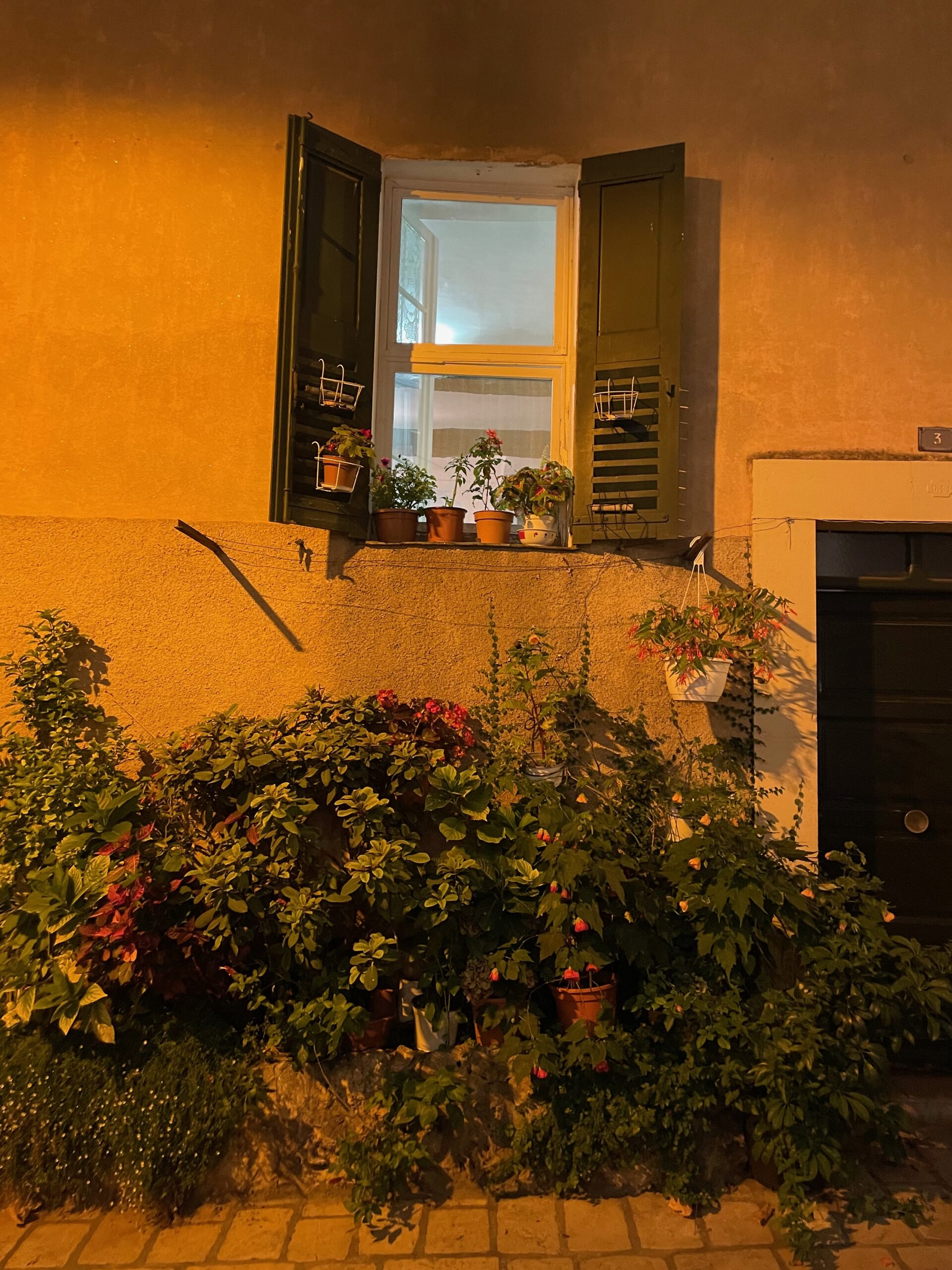
We live in a small town just outside the city, where the hills are covered in scrubland and wild thyme. On our days off, we don’t check emails. Instead, we hike the Calanques-those breathtaking limestone cliffs that drop into turquoise water. We’ve traded heavy pierogi for bouillabaisse and learned that a Sunday without a trip to the local market for fresh olives and goat cheese is a Sunday wasted.
The biggest change, however, is internal. There is a specific wind here called the Mistral. It’s a fierce, cold wind that blows from the north, clearing the sky of every single cloud. It can be annoying-it rattles the shutters and makes the sea choppy-but it leaves the air so crisp and the light so bright that you feel like you’re living inside a painting. Moving here felt like our own personal Mistral. It blew away the stagnation of our old routine and left us with a clarity we didn’t know we were missing.
To Those Considering the Leap
If you are a professional-especially a medical one-considering a move to the South of France, my advice is simple: do it, but bring your patience.
The French system will test you. You will struggle with the Assurance Maladie, you will get frustrated with the banks, and you will occasionally feel like an outsider. But then, you will have a moment-maybe it’s a patient bringing you a bag of lemons from their garden, or the way the sunset turns the limestone hills pink-and you will realize that you aren’t just surviving in a new country; you are finally living.
We still miss Poland sometimes. We miss our families, the specific smell of the forest in autumn, and the ease of speaking our mother tongue. But when we look out at the Mediterranean, we know we’re home. We aren’t just “the Polish doctors” anymore. We are Mateusz and Ania, members of a vibrant, messy, beautiful community under the southern sun.
Renting out our flat was the best decision we ever made. We didn’t just move to a new latitude; we moved to a new way of being. And as they say here in the south, c’est pas mal du tout – it’s not bad at all.